Friday, November 5, 2010

Africa 101.3: Landscape and Weather in Malawi

So what is Malawi like? Malawi is a gorgeous mix of many different landscapes:


distant mountains and expansive prairie;


large trees and scrub bushes;


lush greenery and barren grasslands.


In the villages I was surrounded by dirt roads and fields of corn and tobacco.


During the safari I marveled at the array of vegetation, trees and breathtaking scenic views.


On the shores of Lake Malawi, I almost believed that I was on standing on the edge of the ocean. Of course like most places, exactly what you see depends on where in the country you are and what season of the year it is.

Weather in Malawi varies with the seasons, which are opposite of our seasons in the United States. Spring is generally mid-August through October, and summer is November through March. Rains come seasonally as well, corresponding with the summer season. Temperatures reach up into the upper 80’s and lower 90’s but it feels much hotter than that due to the high humidity. April and May are autumn months, and June and July are winter. There is very little rainfall during the cooler time of the year and temperatures can dip down into the 40’s at night.

Wednesday, November 3, 2010

Africa 101.2: Malawi Statistics

Geography
Malawi is a small landlocked country on the Southeastern side of Africa. According to the CIA's World Factbook, Malawi is one of the least developed countries in the world. It is about the same geographic size as the state of Pennsylvania, but much of the country is swallowed up by Lake Malawi. Only 20% of the land is arable (capable of growing crops), however only a little over 1% of that land is used for the permanent growth of crops such as tobacco, tea, maize and sugarcane.

Population
The state of Arkansas has a population of about 3 million people. Malawi is only about 1/5 the size of Arkansas, yet has a population of about 15 million people. Roughly 45% of the total population of Malawi is children, and nearly 16% of those children are orphans. That brings the total number of orphans in the country of Malawi to somewhere over 1 million children.

Poverty
Up to 65% of Malawi’s population lives below the poverty line of less than $1.00 per day, according to government statistics. As much as 90% live on less than $2.00 per day.

Mortality Rate
There are 13 deaths for every 1000 people each year in Malawi. The life expectancy at birth is 50 years, compared to 78 in the United States. For infants, there are 83 deaths out of every 1000 live births, and 1 in 10 children die before their fifth birthday.

HIV /AIDS
AIDS is the leading cause of death in Malawi. Of the 8.5 million adult population, almost 12% of them have AIDS, or 1 out of every 8 adults. As of 2007, there were 68,000 AIDS deaths per year. Putting that number into even greater perspective, that means 186 adults die of AIDS every day in Malawi.

Since 1991, Malawi has ranked among the bottom 20 countries worldwide on the Human Development Index. Chronic poverty, poor harvests and a high prevalence of HIV/AIDS conspires to eliminate a bright future for the over 1 million orphaned and vulnerable children in Malawi. As the number of orphaned and vulnerable children increase in Malawi, it is proving increasingly difficult for surviving parents, their extended families and relatives who are already under economic hardships, to provide, protect and care for the expanding numbers.

Monday, November 1, 2010

Africa 101.1: Where is Malawi?

I have heard some say it is in the country of Africa. I laugh now, but I must admit I had to dredge up geography from grade school and junior high to recall that Africa is actually a continent. And a really big one at that! In fact, the United States, China, India, Europe and Japan could all fit into the continent of Africa. Africa is not somewhere you want to get lost in!

There are around 50 countries located within Africa (depending on who you ask and how you count), and Malawi is one of the smaller ones located in the southeastern part of the continent. Malawi itself is divided into 28 districts within three regions: Northern, Central and Southern. I traveled to the district of Ntcheu (N’chay-you), technically in the Central region (yet southern part) of Malawi, equal distant from the central capital city of Lilongwe (Li-long-way) and the major southern city of Blantyre (Blan-tire). Within each district are many villages under the jurisdiction of local chiefs, or Traditional Authorities (TA’s for short). Madzanje (Ma-dza-njee) is the village in Ntcheu where Esther’s House Orphanage is located, and the TA is Chief Kwataine(Kwa-tah-hay-nee).

Africa 101: Introduction


Beyond my personal story, everyone I talk to always wants to know more about Africa. Exactly where did I go? What was it like? What are some of the interesting statistics?

In the set of blog posts to come, I hope to address many of those questions with my crash-course Africa 101. I will start with a history lesson, ease into some statistics, and then get to the really good stuff as I talk about the land, the animals, the food, the local lifestyle, and Esther’s House Orphanage.

Join me in this adventure of exploration into Malawi, Africa!

Disclaimer: My information is as accurate as the typical mother-of-four's memory is able to recall...any mistakes are clearly the responsiblity of inaccurate Google information and certainly not in any way a reflection of this writer's sporadic brain function!

Tuesday, October 12, 2010

Moses Musings

Receiving the fullest blessings

I have long been fascinated with Moses of the Bible. Moses is the first person I want to meet when I get to Heaven (followed closely by Paul). Moses didn’t have any special gifts. He was just a man, and an obviously imperfect one at that. But God chose him, spoke with him and used him. I find myself trying to figure out the man that God used in such a mighty way time and time again.

First of all, Moses had God’s hand on him from the start, considering he even lived past infanthood. Moses should have died of any number of things: drowning, predators, dehydration or starvation. There is no logical reason that Pharoah’s daughter should have looked on a Hebrew baby with favor; it doesn’t make sense that Pharoah should have allowed it. And yet Moses lived and grew up in the house of Pharoah of Egypt.

It looks like Moses’s heart was in the right place when he lashed out in anger against the Egyptian taskmaster—and yet we quickly understand that Moses was a hothead that made rash decisions and a coward who ran in fear. Not that I am judging. I get Moses more than I would like to, I’m just trying to understand what God saw in him.

So Moses ran away and began a new life. Tempting! And while he may have lived with a heart for God during that time, there is no record that he was doing anything special on the outside. He was getting up and going to bed, getting married and tending his sheep, having sons and living his life—bothering nobody but yet doing nothing about the great anguish and persecution he knew existed in the world beyond Midian and happening to his own race of people.

Then came the burning bush moment. I have got to credit Moses at this point, because as intriguing as the sight must have been, Moses had to know that this was God doing something that he was going to get roped into if he walked over there. Moses could have rationalized that Zipporah was going to be mad if he missed supper, or that his sheep really needed his attention. He could have even been too afraid, or too selfish with his time. But Moses bothered to go look and see what God was up to, and so God called to him.

God chose Moses to do a really big job. God used Moses to show some awesome displays of power. I’m wondering if people more outwardly committed to God were insulted by God’s choice. And of course God doesn’t make mistakes, but wasn’t God just the tiniest bit put out when instead of responding with gratitude and awe over God’s assignment, Moses instead whined and complained and tried to wiggle out of the honor?

If Moses had refused to go back to Egypt, God would have found another way to free the Israelites but Moses would have been the loser. As it is, Moses already didn’t get the full blessing of his encounter with God. Moses insisted that he could not do the talking himself. Even though God spared Moses as a baby, saw him raised as a Christian by his own mother, delivered him from Egypt to Midian when he should have been killed as a murderer, set a bush on fire that didn’t burn up and spoke to him from the midst of it—Moses didn’t believe that God could use him to speak publically. But you know, I think that it isn’t that Moses didn’t believe God could do it. I think that Moses didn’t believe God could do it for him.

Why do we always feel like the person next to us is somehow more worthy than we are? We look on the outside and determine our value. We listen to others and determine our value. We look in the mirror and determine our value. And our calculations are always wrong.

God does not determine our worth, value or potential based on how we look, what our job is or how many organizations we volunteer for. We are not even ranked by how many hours we spend in prayer or how dog-eared our Bibles are (or aren’t!). God says we are all sinners and all unworthy without Him. And with Him? We can do anything.

Moses had an encounter with God at the burning bush. Moses took the job of a lifetime when he agreed to be God’s messenger boy and go back to Egypt. However, he missed out on a huge blessing when he told God no to speaking himself. God still got the job done, but used Aaron instead of Moses. Had Moses not given in to fear and self-doubt, he would have witnessed the awesome power of God working through him, around and in spite of his weaknesses.

I’m still in awe of Moses, and what God accomplished through him. I’m humbled to know that God can and does use plain old people with visible faults to do amazing God-sized things. But I also recognize that we sell ourselves short when we yield to fear, anger and disobedience. God will get the work done with or without our cooperation. It is us that misses out on the full blessing.

Wednesday, October 6, 2010

The “Joy Joy Joy” of Malawian Worship

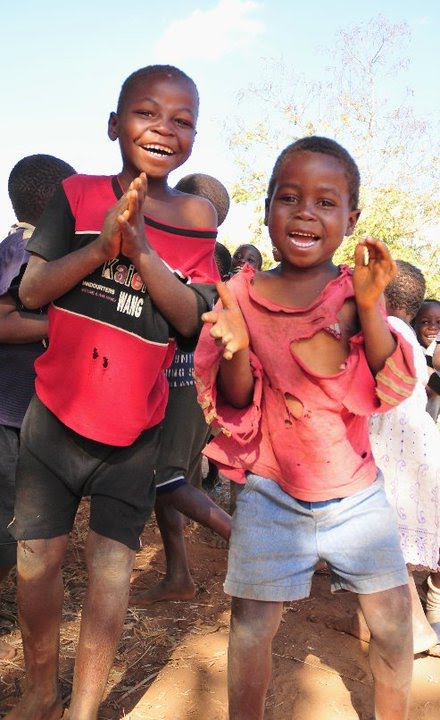
One of the greatest joys about going to Malawi is getting the opportunity to be a part of Malawian worship. As I explained to our kids’ choirs here at home…we are spoiled by pianos, guitars, drum sets, CD players, microphones and screens with words. In Malawi, the people use what God gave them…their bodies! Malawian worship is more than simply singing. It is clapping, it is moving, it is dancing, it is raised voices and it is genuine worship from the heart.

One of the most-loved songs that American teams bring home in their hearts from Malawi is “Palibe Ofana Ndiye”. This is a popular worship song that has been heard in places other than Malawi, and is posted in various forms on the web. There are motions that are performed along with the chorus section. Although the tune, tempo and even exact lyrics vary with each hearing, the general translation is simple:

There is no one like Jesus, there will be no one like Him. I have walked all over the world, I have rounded everywhere, I have searched everywhere; there will be on one like Him.

http://www.youtube.com/watch?v=UXJrBrzyzAk Watch “Palibe”

A new song that I learned from the children is called “Njo, Njo, Njo”. It is a very fun song that is done in a statement/answer form. The leader sings a line and the children add in with “Aleluja” and repeat the line. Each set of words are repeated 4 times, the statements are made in whatever order the song leader desires, and the chorus is interspersed throughout. There are actions for each word set. The best part of the song is the ending words the leader sings. When I asked what the words meant to signal the abrupt ending of the song, I was told the literal translation was “Shut the mouth”. Now THAT was funny!

Jesus gives me joy. (What are ways we show that joy?) By smiling/laughing, jumping, clapping, dancing, making sounds, sitting down and standing up.

http://www.youtube.com/watch?v=vrsAoct5Gr8 Watch “Njo, Njo, Njo”

Last is a familiar song to people who have ever attended Vacation Bible School. Some Americans thought it would be fun to teach the Malawian kids how to sing American songs. One of those songs was “Father Abraham”. The Malawians listened, learned and then promptly “made it their own” by adjusting the tempos, rhythms and pronunciations. The result is a delightful version of the song that will leave you singing the rest of the day.

http://www.youtube.com/watch?v=qZKNiWnh0Hk Watch “Father Abraham"

Monday, October 4, 2010

Widows Lesson

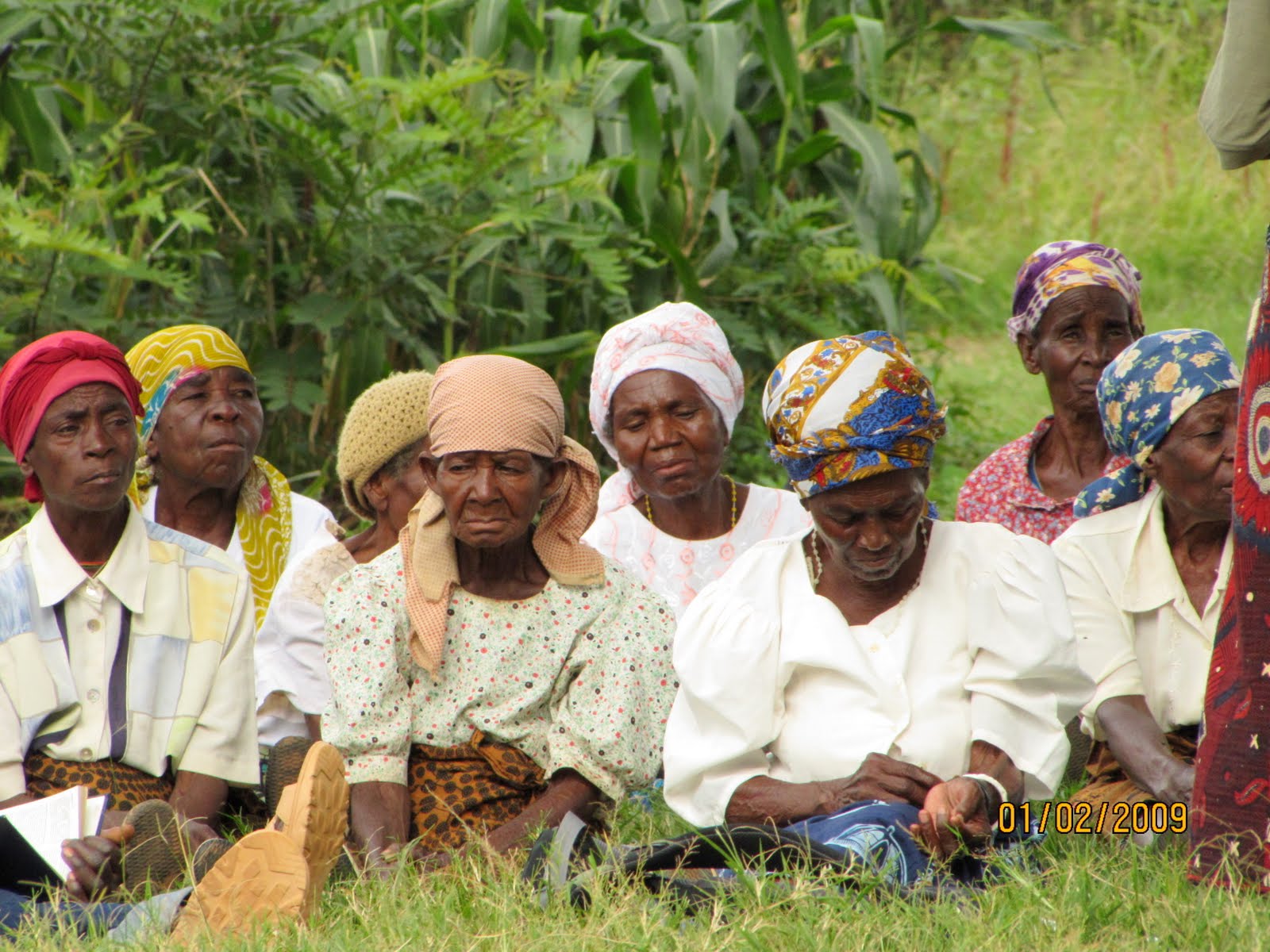
The following is an outline and brief notes of the lesson we shared with the widow women on Saturday morning. It is a lesson that is more than worth reading for us all.

When we become children of God through faith in Jesus Christ, we become responsible to tell others about Christ. There is no greater privilege than sharing the love of God with your friends, family and neighbors. –Thirty Discipleship Exercises, The Pathway to Christian Maturity

WHO does God call to tell others about Christ?
“Come, follow me,” Jesus said, “and I will make you fishers of men.” Matthew 4:19.

Jesus was a rabbi who bypassed the learned scholars and instead chose ordinary men to be his disciples. There are not any who are “more” or “less” qualified to tell of the blessed hope of Jesus Christ. God calls anyone and everyone to follow Him and share the good news with others.

HOW do we tell others about Christ?
In the same way, let your light shine before men, that they may see your good deeds and praise your Father in heaven. Matthew 5:16

We don’t have to say a word in order to share Jesus with others; our inner peace and joy coupled with the outward extension of selfless good works will go further in speaking to people than a lecture ever could. However we must guard against Satan the Tempter, who comes to steal our light and ruin our testimony. We must be diligent to daily put on the full armor of God so that we stand against the devil’s schemes. (Ephesians 6:11)

WHEN do we tell others about Christ?
But in your hearts set apart Christ as Lord. Always be prepared to give an answer to everyone who asks you to give the reason for the hope that you have. But do this with gentleness and respect. 1 Peter 3:15

We should always be ready and willing to tell others about Jesus without shame or hesitation. Yet we must remember to speak out of genuine love or we risk being as appealing as a “resounding gong or clanging cymbal.” (1 Corinthians 13:1) As Christians, we should strive for our lives to exhibit the Fruits of the Spirit: love, joy, peace, patience, kindness, goodness, faithfulness, gentleness and self control. (Galatians 5:22-23) When others see us set apart living for Christ, we will have every opportunity to share with them the reason for our hope.

WHY do we tell others about Christ?
For we cannot help speaking about what we have seen and heard…Acts 4:19-20

Peter and John were thrown into prison for telling others about Christ. They were later questioned and warned to stop speaking in Jesus’ name. Peter and John answered simply and to the point. They could not help speaking about Jesus, and the impact He had in their lives. Sharing the good news was not a choice for them and it should not be a choice for us.

WHERE do we go to tell others about Christ?
But you will receive my power when the Holy Spirit comes on you; and you will be my witnesses in Jerusalem, and in all Judea and Samaria, and to the ends of the earth. Acts 1:8

We are called, as a Christian people, to go anywhere and everywhere sharing the good news of Christ. We all receive the power of the Holy Spirit when we invite Jesus to be Lord of our lives, so none of us have the excuse of weakness or ineptitude. As far as where we go, it is no more or less important to go across the world as it is to go across the street. The only question left is: are we going?